Toddler Ballet vs. Mommy & Me Dance Classes: What's the Difference?
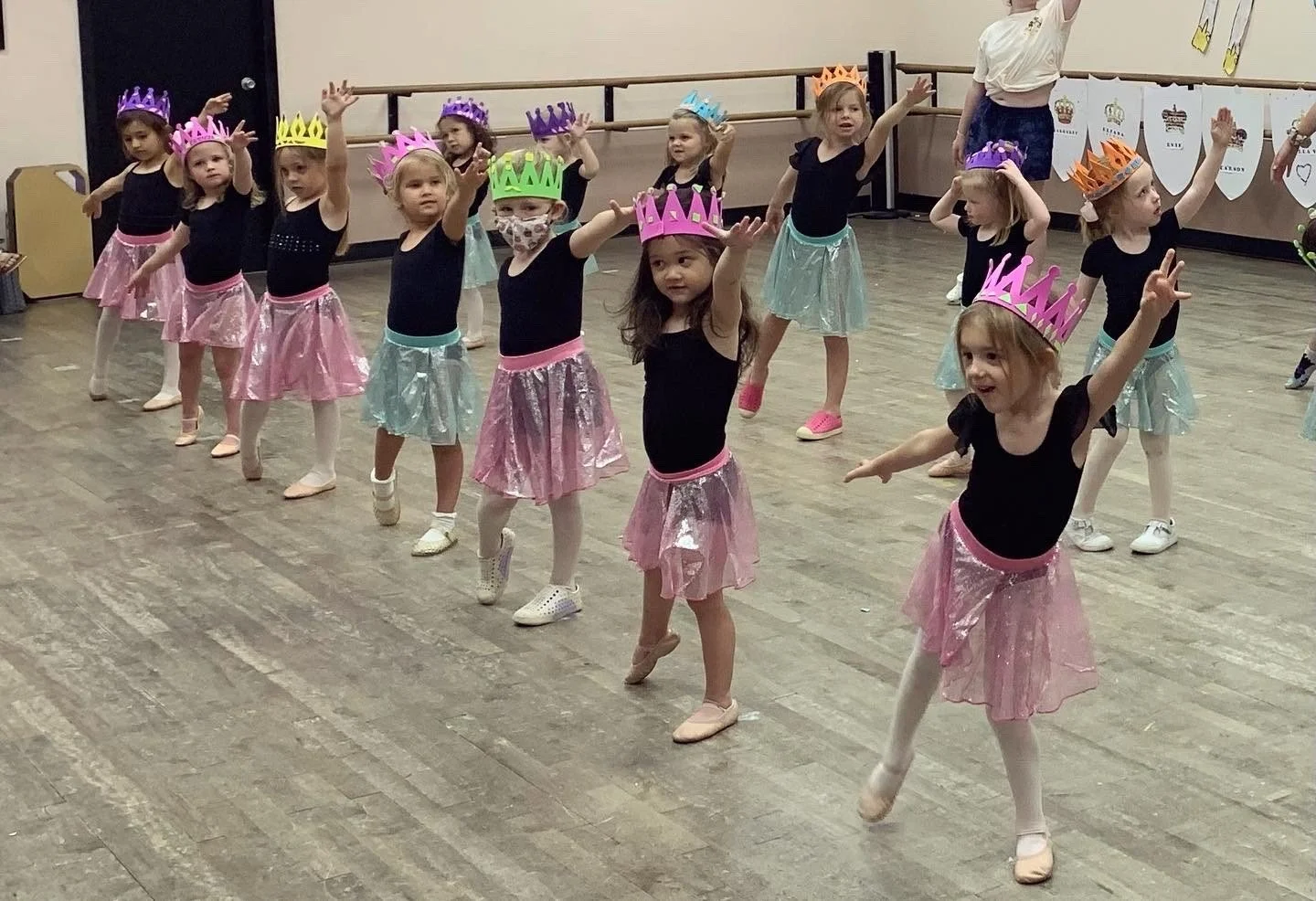
For Austin parents looking for a first dance class, two options often stand out: toddler ballet and Mommy & Me dance classes. Both can introduce young children to music and movement, but the biggest difference is how independently the child participates and what the class is designed to teach.
Quick answer: Mommy & Me dance classes generally involve a parent or caregiver participating alongside the child, making them a natural introduction for very young dancers who are still becoming comfortable in a class environment. Toddler ballet is typically more child-focused and may introduce greater independence along with age-appropriate ballet concepts. The right choice depends less on which class sounds more advanced and more on your child's age, comfort level, and readiness to participate without a caregiver beside them.
What Austin parents should know
Mommy & Me classes are designed around shared participation between a young child and a parent or caregiver.
Toddler ballet generally gives children more opportunities to participate independently while learning introductory dance concepts.
A child who needs time to warm up in new environments may benefit from beginning with a caregiver nearby.
Austin families balancing preschool, activities, and travel across areas such as Westlake, Tarrytown, Rollingwood, and Northwest Hills may also want to consider which class format fits comfortably into the family's routine.
Neither option needs to be treated as a race toward more advanced dance. The best starting point is the environment in which your child can participate comfortably and enjoy movement.
What Is a Mommy & Me Dance Class?
A Mommy & Me dance class is a shared movement experience in which a young child participates with a parent or caregiver, providing extra familiarity and support while the child explores music, movement, and a group class environment.
Despite the familiar "Mommy & Me" name, the participating adult may be another caregiver depending on the program's policies. The defining feature is adult participation.
For a young child in Austin who has had limited experience with structured group activities, that familiar adult can make the transition into dance feel more approachable. Children can experience following a teacher, moving with music, taking turns, and participating around other children without immediately being expected to do everything independently.
That distinction can be especially useful for families moving from mostly parent-led activities toward preschool, dance, or other organized programs.
What Is Toddler Ballet?
Toddler ballet is an early-childhood dance class that introduces young dancers to age-appropriate movement and beginning ballet concepts while typically encouraging more independent participation than a parent-and-child class.
At this age, ballet should not be confused with the highly technical training associated with older dancers. Young children are still developing coordination, listening skills, body awareness, balance, and the ability to follow directions in a group.
Toddler classes can give children an opportunity to practice those foundational skills while becoming familiar with a dance-class setting.
For Austin parents, the question is often whether their child is ready for that additional independence. A toddler who happily joins group activities without a caregiver may respond differently than one who still wants a parent close by in unfamiliar environments.
Shirley McPhail School of Dance serves families looking for age-appropriate opportunities to introduce children to dance. From here, we encourage parents to think about developmental readiness and the experience their child will have in class rather than simply choosing the class with the more advanced-sounding name.
What Is the Biggest Difference Between Toddler Ballet and Mommy & Me?
The biggest difference between toddler ballet and Mommy & Me is caregiver involvement: Mommy & Me keeps the adult actively involved, while toddler ballet generally shifts more of the class experience to the child.
That difference changes the experience for both the dancer and the parent.
Mommy & Me Dance Toddler Ballet Parent or caregiver participates Child generally participates more independently Emphasizes shared movement experiences Introduces child-focused dance experiences Can ease the transition into group activities Can build comfort participating without a caregiver Often suited to children needing close adult support Often suited to children ready for greater independence
Exact class structure, age ranges, and participation requirements vary by dance school, so parents should check the requirements for the specific class they are considering.
How Can You Tell Which Class Your Toddler Is Ready For?
Your toddler may be ready for an independent ballet class when they can separate comfortably from you, respond to simple instructions, and participate in a group without needing continuous caregiver involvement.
Age can provide a starting point, but readiness is also behavioral.
Watch how your child responds in everyday situations around Austin. At preschool, library activities, playgroups, or other children's programs, do they comfortably engage with another trusted adult? Can they follow a simple direction? Do they enjoy copying movements? Can they stay engaged with a short group activity?
A child who is hesitant does not necessarily dislike dance. The class format may simply be asking for more independence than the child is ready to give.
What Are the Benefits of Starting With a Parent-and-Child Class?
Starting with a parent-and-child dance class can give a young dancer a familiar source of reassurance while introducing the routines, sounds, people, and expectations of a structured movement class.
That shared experience can be particularly valuable when dance is a child's first organized activity.
A parent or caregiver can model participation, help the child understand what is happening, and make an unfamiliar environment feel more predictable. Over time, some children naturally become more interested in following the instructor and participating independently.
For families throughout Travis County, this can make Mommy & Me a useful bridge between informal movement at home and child-only activities.
What Are the Benefits of Toddler Ballet?
Toddler ballet can help young children practice coordination, body awareness, listening, musicality, and independent participation through developmentally appropriate dance activities.
The goal at this stage is not perfection. Young dancers need room to explore how their bodies move and learn how a class works.
Parents may notice that their child becomes more comfortable following a teacher, waiting for instructions, moving with a group, or trying something without immediate help from a caregiver. These experiences can be valuable whether a child continues ballet for years or simply enjoys dance during early childhood.
What If Your Child Is Shy or Has Trouble Separating?
A child who is shy or uncomfortable separating may be better suited to a caregiver-participation class initially, especially if having a familiar adult nearby helps them engage rather than withdraw.
Austin toddlers encounter new social environments at different rates. One child may walk confidently into a classroom in West Austin, while another needs several visits before feeling comfortable.
Avoid measuring readiness against another child of the same age. Instead, look for progress in your own child's comfort with unfamiliar adults, group routines, and short periods of separation.
If your child becomes increasingly interested in participating without your help, that may be a sign that an independent class is worth exploring.
What Should Parents Look for in an Early Childhood Dance Class?
Parents should look for an early childhood dance class that matches the child's developmental stage, clearly explains caregiver expectations, and makes movement engaging rather than treating toddlers like miniature advanced dancers.
Before choosing a program, ask about:
The recommended age range.
Whether caregivers stay in the room or actively participate.
How much independence is expected.
What children typically do during class.
Clothing or footwear requirements.
How instructors handle children who are hesitant to participate.
How families know when a child is ready for the next class level.
For families driving from areas such as Bee Cave, Westlake Hills, Lakeway, or central Austin, practical considerations matter too. A class that works with nap schedules, preschool routines, and realistic drive times may produce a better experience than one that regularly leaves a toddler tired or rushed.
When Should You Ask a Dance School for Guidance?
Parents should ask the dance school for guidance when they are unsure whether their child's age, previous class experience, or comfort with separation is a better fit for Mommy & Me or toddler ballet.
A class name alone cannot tell you everything about its structure. Age ranges and expectations can differ between programs.
We can help families understand the format of available classes and determine which option aligns with their child's stage and comfort level.
Explore age-appropriate dance class options for your young dancer
What Mistakes Should Parents Avoid When Choosing a First Dance Class?
The most common mistake is choosing a class based on which option seems more advanced instead of which environment best matches the child's current readiness.
Mistake: Moving to independent ballet because another child the same age has.
Consequence: Your toddler may spend more energy managing separation than enjoying the activity.
Better approach: Use your own child's behavior as the guide.
Mistake: Assuming hesitation means a child does not like dance.
Consequence: A potentially enjoyable activity may be abandoned when the real issue is the class format.
Better approach: Consider whether caregiver participation would make the experience more comfortable.
Mistake: Focusing only on technique.
Consequence: Parents can overlook foundational experiences such as listening, coordination, musicality, and group participation.
Better approach: Choose a developmentally appropriate introduction to dance.
What Does a Common Austin First-Dance Scenario Look Like?
A common Austin first-dance scenario is a toddler who loves music and dancing at home but becomes hesitant when asked to enter a new class without a parent.
This is a general scenario, not a specific student story.
A child might dance constantly in the living room, copy movements from family members, and become excited when music starts. At a new studio, however, that same child may stay close to a caregiver.
A parent-and-child format can provide an intermediate step. As the classroom becomes familiar and the child grows more comfortable following an instructor, the family can consider whether a more independent toddler class is appropriate.
How Do You Compare Mommy & Me and Toddler Ballet?
Choosing between Mommy & Me and toddler ballet comes down primarily to whether your child benefits from caregiver participation or is ready for a more independent class experience.
Mommy & Me may be the better starting point when your child is very young, cautious in new environments, or happiest participating with you nearby.
Toddler ballet may make sense when your child is comfortable separating, enjoys following directions, and is ready to participate more independently.
Neither path is inherently better. They serve different stages of early childhood.
Where Can Austin Families Look for Early Childhood Dance Classes?
Austin families can look for early childhood dance options that are practical for their location, schedule, and child's developmental readiness rather than choosing solely by class title.
Families may be coming from central Austin, Westlake Hills, Rollingwood, Bee Cave, Lakeway, Tarrytown, or other communities in and around Travis County. For toddlers in particular, a manageable routine can help make class day more enjoyable.
What Happens If You Put a Toddler in an Independent Class Too Soon?
Starting an independent class before a child is comfortable with separation can make it harder for them to participate fully, even when they genuinely enjoy music and movement.
The issue is not that a child has "failed" ballet. They may simply need a different entry point.
Rather than pushing through repeated distress solely to stay in a particular class level, parents can ask whether a caregiver-participation option provides a more appropriate introduction.
Ask us which early childhood dance format may be the best starting point for your child
Frequently Asked Questions
What is the main difference between Mommy & Me and toddler ballet in Austin?
The main difference is caregiver participation. Mommy & Me typically involves an adult participating alongside the child, while toddler ballet generally gives the young dancer more independence. Exact ages and expectations vary by program, so Austin parents should confirm the format of the specific class before enrolling.
What age should a child start toddler ballet?
The appropriate starting age depends on the dance school's class requirements and the child's readiness. Age is only part of the picture. A child also needs enough comfort with separation, group participation, and simple directions to enjoy the class format. Parents should check the specific program's age guidelines.
Does a mom have to attend a Mommy & Me dance class?
Not necessarily, because caregiver policies depend on the individual program. Although "Mommy & Me" is a commonly used class name, some programs may permit another parent or caregiver to participate. Austin families should confirm who can accompany the child before registering.
Is toddler ballet serious ballet training?
Toddler ballet is generally an age-appropriate introduction to dance rather than the technical ballet training associated with older students. Young children are still developing coordination, body awareness, listening, and group-participation skills. Parents should look for a program whose expectations match early childhood development.
Is Mommy & Me a good first activity for a shy toddler in Austin?
Mommy & Me can be a helpful first group activity for a child who feels more comfortable exploring new environments with a caregiver nearby. For an Austin toddler who enjoys movement but hesitates around unfamiliar teachers or groups, shared participation may provide a gentler introduction to structured classes.
How do I know if my toddler is ready to dance without me?
Look for comfortable separation, willingness to follow another adult's directions, and interest in participating with a group. Experiences at preschool, playgroups, and children's activities around Travis County can provide useful clues. A child who consistently needs you beside them may benefit from a parent-and-child class first.
Can a child move from Mommy & Me into toddler ballet?
A child may be able to transition from caregiver-participation classes to more independent dance as their age, confidence, and class readiness develop. The appropriate next step depends on the program and individual child. Families should ask the dance school about available class levels and readiness expectations.
What should Austin parents ask before registering for a toddler dance class?
Ask about age requirements, caregiver participation, class structure, clothing, footwear, and how much independence is expected. Austin parents should also consider practical factors such as class time, nap schedules, preschool routines, and travel time. A developmentally appropriate class that fits the family's routine can make participation easier.
Help Your Toddler Find the Right First Step in Dance
The best first dance class is one that gives your child an age-appropriate opportunity to enjoy music, movement, and learning. Whether that means participating together or beginning a more independent ballet experience, we can help Austin-area families explore an option that fits their young dancer's current stage.
Find an Austin Dance Class That Fits Your Young Dancer
Give your child a welcoming, age-appropriate introduction to dance based on where they are right now.
